Friday, March 2, 2018

Slice of Life 2018 Day 2: Generating Ideas

On the back cover of Kate Messner’s 59 Reasons to Write (Stenhouse, 2015), Messner writes, “In order to teach writing effectively, teachers must be writers themselves. They must experience the same uncertainty of starting a new draft and then struggling to revise. As they learn to move past the fear of failure, they discover the nervous rush and exhilaration of sharing work with an audience, just as their students do. Only by engaging in the real world of writing can teachers become part of the writing community they dream of creating for teachers.”

This is why I am blogging.

This is why I decided to participate in the Slice of Life #18 challenge.

Ultimately, I want to become a more effective teacher of writers.  

Based on my first official slice, I was ecstatic that six people commented on my blog post yesterday. Typically, I don’t have many readers and it’s encouraging to have someone actually take the time to read and respond to my writing. (My writing!) And yes, referenced in the quote from Kate Messner above, I experienced a bit of the nervous rush and exhilaration of sharing work with an audience.

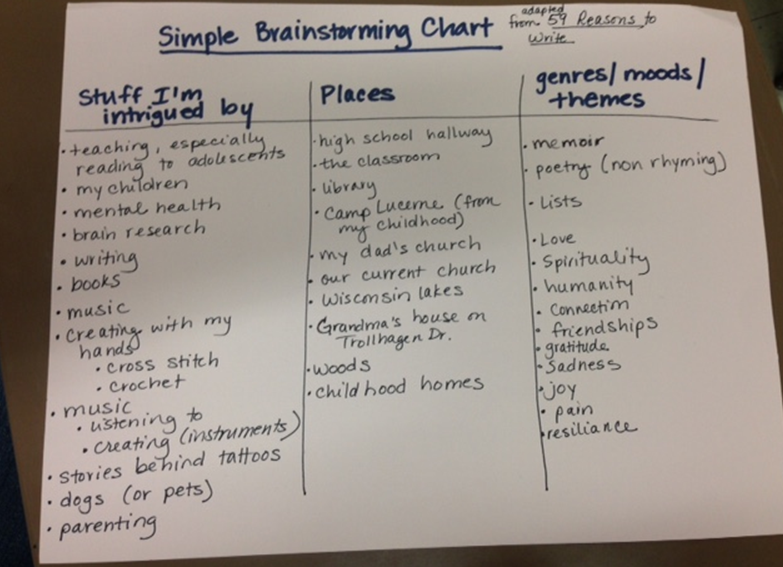
Still, I am thinking about what I will share for the next month, and I am considering what I already have in my collection of resources to guide me. As I was scanning my bookshelf today, Kate’s 59 Reasons to Write practically fell on me. When I read this book last summer, I bookmarked her simple brainstorming chart from Chapter 2: Getting Started. This lesson reminded me that it’s often necessary to combine ideas in unexpected ways. Her chart emphasizes that an author can combine an idea from the first column with different settings or themes as a writing tool. Immediately, I began charting some ideas I could use for slices this month. I used these three categories: stuff I'm intrigued by, places, and genres/moods/themes. (Note: my categories are slightly different than the book.)

My simple brainstorming chart, adapted from 59 Reasons to Write
I’m certain that this chart will not be my only source of ideas for blog posts, but I’m thankful to have some seeds to play around with as I slice this month.

Thursday, March 1, 2018

Slice of Life 2018 Day 1: Do it again tomorrow

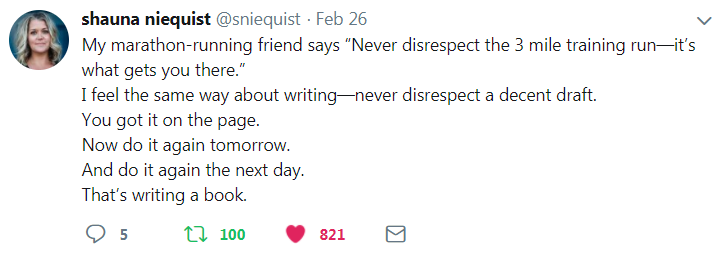
A few days ago author Shauna Niequist posted this on Twitter:
Shauna's Post from 2/26/2018

These are the kind of lines I love to linger over. Shauna’s words fill me. Inspire me.

This is my first Slice of Life Post, and I have wanted to try “slicing” for years. Although I been blogging a few months now, I am intimidated. I am beyond my comfort zone. I am worried. I am overwhelmed in thinking about keeping up with a challenge like this and having enough worthy topics to publish.

Yet, I think this challenge (and writing in general) is very much like the message Shauna Niequist shared- it is the act of working on something every day, accomplishing something worthwhile, and building on it. I am not writing a book, but these are three lines that I want to remember:

“You got it on the page.
Now do it again tomorrow.
And do it again the next day.”

See you tomorrow!

Sunday, February 25, 2018

February Reflections

Since I began blogging last summer, I started paying more attention to what other bloggers wrote about, noticing their content, how their information was shared, and how I could emulate that. Long before I tried blogging I followed blogger and author Ruth Ayres, who I have admired as a writer for some time now. Ruth Ayres has a lovely, exquisite writing voice, and I am always eager to read what she notices and shares. I am especially grateful that she invites other bloggers to celebrate, providing a space to share blog link ups. Sharing my writing continues to be uncomfortable and scary. I continue to find myself in a bit of a frazzle each time I publish my writing in a blog post.

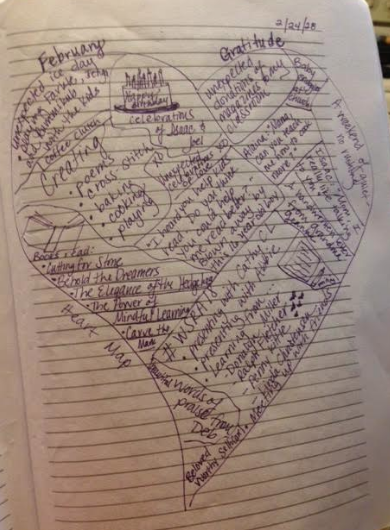
Last month Ruth wrote a post about creating a Heart Map reflecting on her month of January. Of course her post is incredibly inviting and I adored her idea of reflecting on a whole month using a format of a Heart Map. I have been Heart Mapping in my notebook for a while now, but it was almost always based on one idea or after one day. Before Ruth's post, I had not considered Heart Mapping based on the reflection of a whole month (or extended period). As I paged through my journal, I noticed so many things that were worthy of celebrating.This is what February’s Heart Map looked like for me:

February Heart Map (apologies for the poor quality of this image)  

Based on my February Heart Map, there are two things that I wanted to especially celebrate this month:

1. Wisconsin State Reading Association (WSRA) Convention 2018
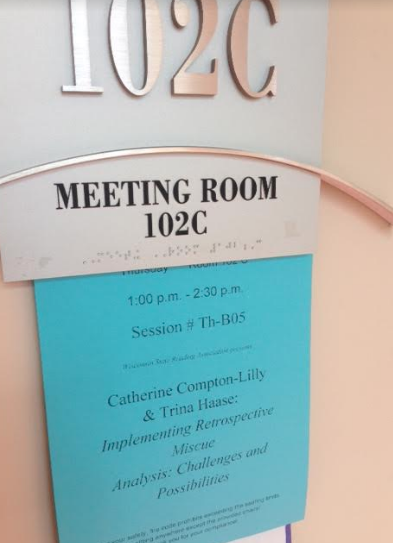
I had the honor to present twice at the WSRA Convention this year. For one of the presentations I was invited to present with Dr. Cathy Compton-Lilly on some of the work that I have been doing with Retrospective Miscue Analysis (RMA) with a few of my high school students. Although I have presented at state and local conferences before, I was really intimidated to lead a presentation with Dr. Compton-Lilly, especially since it was a packed conference room. It was humbling to share what I’ve learned about RMA with over one hundred educators and answer questions.
Our conference room sign 
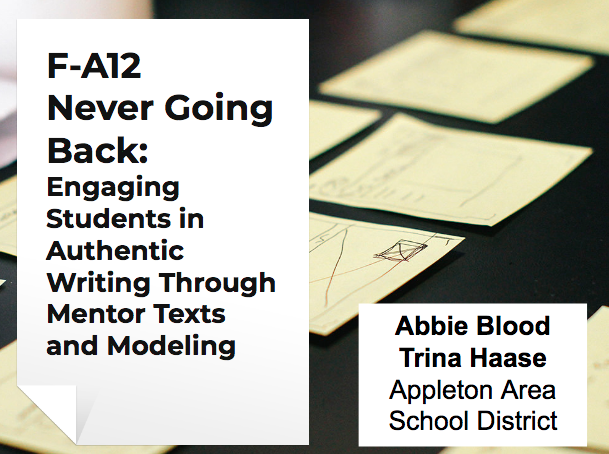
I also presented with my dear friend and brilliant colleague, Abbie Blood. When I was in my role of a secondary district literacy coach in my district I worked with Abbie as often as I could. Abbie and I learned how to use effectively use mentor texts with high school juniors. Our presentation was a celebration of our process, our purpose, the excitement of the difference in quality of our student writers, and how this continues to be a journey of learning for us. Abbie and I presented to a small group of about thirty educators, but they were so engaged and eager to try some of the ideas that Abbie and I presented. After the presentation Abbie shared with me, “I felt so validated as a teacher. I love that there are other people who are interested in this kind of work.”

Our first presentation slide

2. Student Celebration
Recently, I was working on goal setting with my ninth and tenth grade classes using a strategy called WOOP, a strategy used for teaching students to better use self-regulation skills. I invited each student to select one academic goal to work on for Quarter 3. Many of my students set goals such as, “I will complete all of my homework on time in Science” or “I will use my time wisely in math class.” Two weeks later I conferred with each student about his or her goal. One of my sophomores, Nathan (a pseudonym), created a goal about reading. As we were conferring, Nathan quietly said to me, “I heard that you help kids read. Do you think that you could help me read better?” This blew me away. I have never had a student ask me this before. The next week I scheduled a time to meet with him, and we started working on RMA together. I did not expect that using a goal setting strategy and conferring would provide this opening with Nathan.


***************
As my daily writing practice usually includes a Haiku, here is a double Haiku about my February gratitude that I wrote after I completed my Heart Map :

Stuck in negative
Self-talk spooling in my mind,
Yet good surrounds me.

Celebrating joy -
A practice worthy of time
I must continue.

Saturday, February 17, 2018

Taking Care of Myself: Challenging but Worthy Work

I was introduced (okay thrown) into the world of At-Risk Education this year. In my nearly eighteen years of teaching, I have always taught students who fall into the category of at-risk or what I like to call underserved students. However, I have never had such a high concentration of underserved students in one class (several classes a day) at once.


It has been really challenging work.


Many (actually, most) of my underserved high school students are incredible human beings. Yet many of them have not yet experienced success in our traditional school system. I assume that for many of my underserved students it is easier to say, “I don’t care” or not show up (mentally and or physically) because it feels safer than trying and taking the risk of feeling like a failure. Again.


I especially yearn for each of my underserved students to find success in school, as I know that the more education he or she receives, it is more likely that he or she will experience a better overall standard of living as adults.


It has been really challenging work.


I often take my role as a teacher and mentor so personally, especially when one of my students does not make good academic or behavioral choices. As many of my colleagues, I carry my students’ stories, their comments, and their conversations far beyond the traditional classroom walls. I’ve thought a lot about some of the heart-wrenching experiences my students have shared with me. I’ve privately written about many of my students. I’ve prayed for my students. I’ve wondered and worried about my students when they don’t show up for school or permanently leave our school community. It is painful.


It has been really challenging work.


This past Wednesday I had the opportunity to learn from Lucas Jadin, educator and team member of Train2BeClutch. Lucas was powerful and engaging as a speaker, and I especially appreciated how he was vulnerable with our staff. He reminded me that so many people fear failure or not being enough of who we feel that we need to be. (Trust me, I certainly struggle with this.) Later I emailed him to thank him for what his work taught me and also as a plea for more suggestions of how I could better meet the needs of my underserved students. One of the responses Lucas shared with me was this:


Take care of yourself. Most of those kids do not even have close to a stable adult in their life. Just being the best version of yourself is a huge win for the kids.


Lucas’s response has lingered with me all week. As a mom, wife, friend, Girl Scout co-leader, and teacher, I often put myself last. Dead last.


But I realized that I am already doing worthy things to take care of myself. These things all help me to take care of myself and show up as a better human being, even when I am having a bad day.

For me, each day I strive to do these four things:

  • I write. Every day. My writing is usually not worth publicly sharing, but it helps me to get the yuck out of my day. It is a space only for me. When I started making daily writing a priority, I realized that I became more reflective and responsive to my family and students and to myself. Writing is often how I wrestle with what bothers me the most. 
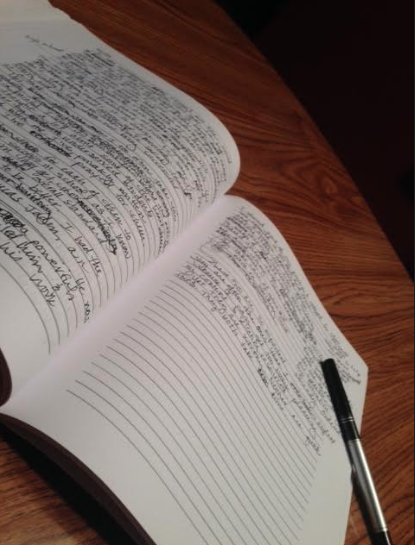
  • A glimpse of this morning's writing
  • I read. Stories often help me escape and distract my busy mind. Reading was what often got me through hard times in adolescence and as an adult. I need escape in a safe and healthy way. This past January and part of February I read Cutting for Stone, a book that was on my to-read list for years. As my friend Sam once shared with me, it would be a story that would suck me in. It did, and it even helped me consider medicine and healing and surgery in a radically different way.
  • I walk. Although I often walk to get more exercise for myself and my dogs, it is an easy way to clear my head. I often enjoy the quiet and peace I experience on walks. Sometimes walking is the only time I can find time without anyone else with me. 

Here is one of my walking buddies
  • I meditate. Okay, I’m working on meditating. When I find time to meditate, my body feels more relaxed. I show up as a better human being to my family and friends and students. I recently started using an App called Headspace to help get into the practice of meditating more.
None of these four practices cost me any money. They take little stretches of time, something that is more manageable for me to accomplish.

Whether I am in the role as a mom, wife, teacher, or leader, I am constantly working on being a better human being. It has been really challenging work. But worthy work.

Ultimately, I need to make sure that I take care of myself.

What do you do to take care of yourself?
Saturday, January 27, 2018

Miscues and Modeling


“I am convinced, absolutely convinced,
that embarrassment is not only a true enemy of learning,
but of so many actions we could take to better ourselves.”
Thomas Newkirk from (embarrassment) (Heinemann, 2017)  

When I first began using RMA with a handful of ninth and tenth grade students this year, I didn’t expect the deep levels of embarrassment that my students would reveal when I asked them to read orally to me. Of course I knew that reading was not an area that these students felt was a strength for them, but I had worked exceptionally hard to develop a good rapport with them. They knew I had struggled as a reader in elementary and middle school, often feeling stupid and inadequate as a student and person. In fact, these were the same students who told me that they trusted me.

Trust is not an easy thing to come by, especially with underserved high school students.

Two months into the school year I explained the procedures and primary objective of RMA to the students I was working with. I’ve shared before of what I like about RMA, but I think it warrants repeating: I love that RMA isn’t about identifying mistakes or determining a reading level. Ultimately, it’s about listening to a reader and letting that student guide the conversation about his or her reading. Thinking and talking about miscues helps the student and teacher better understand what kind of strategies that student is using.

RMA is a strength-based approach. It helps us meet students where they are.

Part of the process of RMA is to record the student orally reading a short text. Recording a student’s oral reading helps the student be able to listen to his or her reading and be metacognitive in his or her moves as a reader. Listening to a recording also helps the teacher analyze the reading and consider possible mini lessons to inform instruction. After talking with my school’s technology integrator, I used an online video editing program called WeVideo. WeVideo is cloud-based, so I could easily access the audio files from any device, and I could use the audio recording feature with a Chromebook.

As I was figuring out how to best incorporate RMA into my classes/instruction, I invited my students to record their reading in a quiet corner of the classroom as I was reading/conferring with the rest of the class. Initially, one of my students refused to read for me. He (I’ll call him Theo) told me how stupid and boring reading was and that he would not read for anyone. I gently explained to Theo (again) about how every person miscues as he or she reads. I studied him as talked with me about his refusal to read. He looked visibly uncomfortable, his body straight, his hands clenched.

I didn’t push him.

A few days later, when I quietly approached him again, Theo reluctantly agreed to work on RMA with me on one condition - if it was just the two of us and no one else could hear him read. I agreed and told him that I would figure out a time that he and I could work together without his peers in the room.   

Theo’s hesitation to orally read reminded me of a conversation I had at the beginning of the school year with my eleven-year-old son, Isaac. An avid reader, Isaac devours books. He is the kind of kid who reads with a flashlight under his sheets well after I’ve tucked him in for the night. Isaac loves to visit the library and bookstores. He even confidently reads in front of our congregation at church. Yet, once Isaac told me that he hates reading aloud to his teacher, especially when his teacher is conducting a reading benchmark. He recently told me:

“Mom, I hate it. Out of the corner of my eye I see her make a mark every time I say something wrong. It makes me feel nervous. I mess up more. I can’t see what she’s writing about me. It's awful... Once I had a bad day and went down a level. Just because I made some mistakes.  And then I had to switch reading groups and it was on my report card. I hate benchmarking.”  

Yikes.

Isaac generally likes school. He likes his teacher. He loves reading and knows he’s a strong reader. If benchmarking makes him nervous, I cannot imagine what it feels like for students who already feel stupid as readers.

Based on Theo’s conversation, I decided that we needed to meet in a less threatening environment. In our high school we have a non academic daily class hour, Flex, that is reserved for students getting help in their classes or meeting with a group/club. As a teacher I can request to meet with a student or a student can request to meet with me. I couldn’t meet with these students every day for RMA, but I figured out a way that I could meet with each student individually to deliver RMA once every two weeks. It wasn’t (and still isn’t) ideal, but I figured that some time was better than no time.

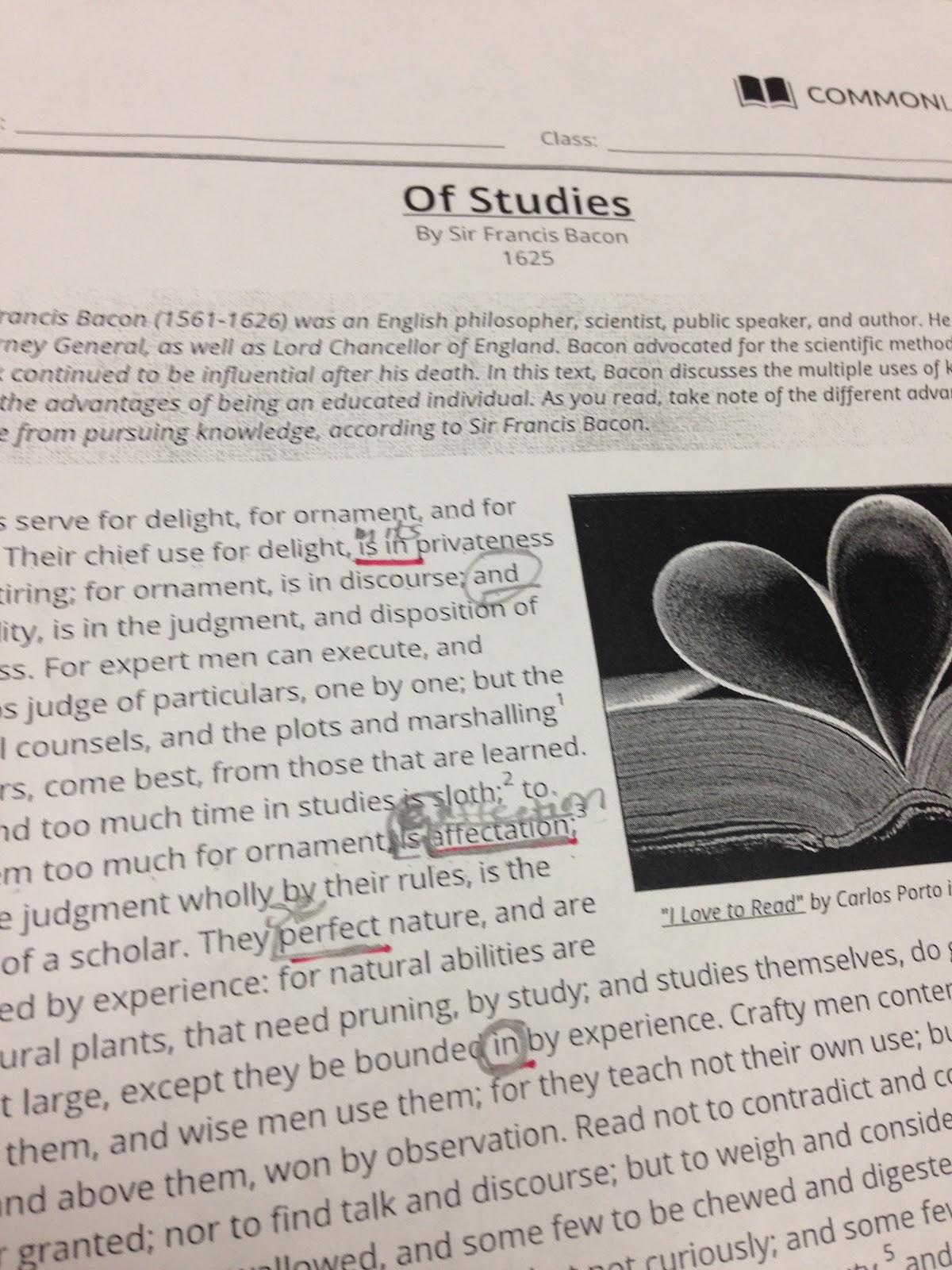
After some personal reflection, I also decided that I needed to do a more thorough job of explaining RMA to my students. To accomplish this I decided to model myself orally reading a text and have a conversation with them about my miscues. I wanted to show my students some of my vulnerability as a reader, so I selected a text that was intimidating to me - one I knew would challenge me. Even though I am a voracious reader, I still struggle with many texts, and I wanted my students to see this. I selected a short essay by Sir Frances Bacon, “Of Studies," to read. I recorded my oral reading and later listened to it with my students. Analyzing my miscues with my students helped me explain what it meant to miscue and it showed my students that everyone miscued. Using my miscues, I taught my students what an omission, insertion, and repetition was, and it was how I explained the difference between a high level and a low level miscue. My reading and conversation about my reading was authentic and helped me to better understand what my students went through when they had a conversation with me.

My miscues from "Of Studies"


Of course, listening to my reading and talking about my miscues with my students took extra time. It was less time that I worked with my students on their reading. However, I believe that taking the extra time it took me to model and talk about my miscues made a huge difference for my students. When we started using their reading and having conversations about their miscues, I found that we had meaningful and engaging conversations. Best of all, when it was Theo’s turn to read his first text, his face and body looked relaxed. I felt that Theo revealed more about himself as a reader and learner than before.

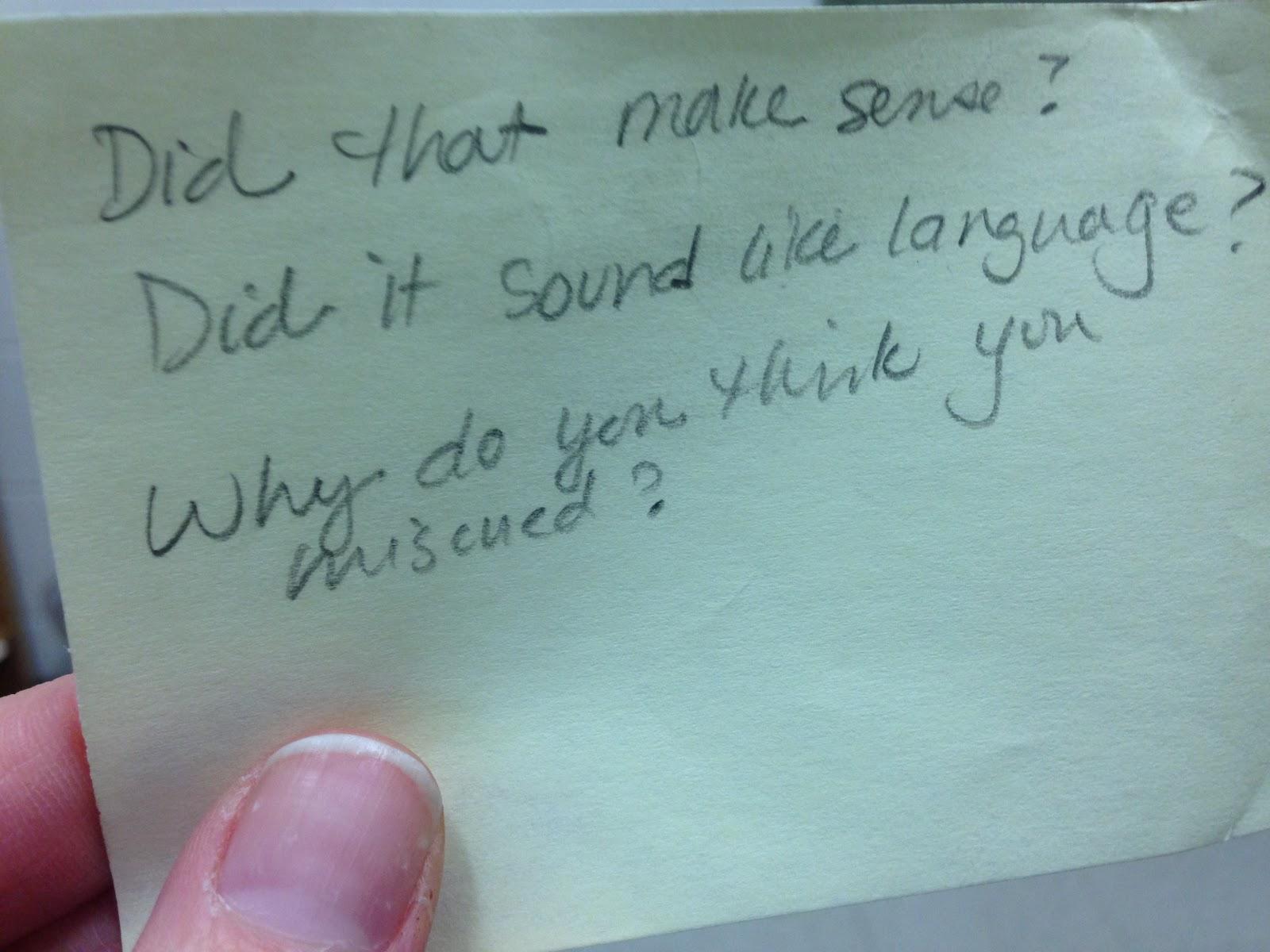
Based on my conversations with Isaac about his reading benchmark and listening to Theo's hesitations, I made some changes in some of my practices with RMA. Now I try to be as transparent as possible with my students. I invite them to view my notes during our RMA sessions. In addition, although I analyze student miscues based on the recording before I meet with each student and have some teaching points planned, I always let the student lead the conversation based on what he or she notices as a reader and learner. This means that I don't always use the mini lesson I planned, and that's okay. I also post sticky notes as a visible reminder to me and my students about what we want to consider when we think about our miscues.

One of my sticky note reminders


Overall, I am grateful to have the experience of using RMA with my high school students. Watching my students and listening to them share their insights about reading has been inspiring. It has also deepened my knowledge for learning more about the complex process of reading and the direction I need to take to serve my students better.

Saturday, January 20, 2018

Essential Writing Tools: Heart Maps, Gratitude, and Haiku

Although I haven't kept up with blogging as regularly as I wanted to, I have maintained my daily personal writing habit, handwriting my thoughts in a thick, weathered notebook. Unfortunately, I often find myself tangled in the day-to-day bustle of life, so writing helps me remember and leaves me with meaningful breadcrumbs. Every few weeks, I take the time to reread my loopy, messy words, and I almost always find myself in awe of what I took the time to notice and record.

Yesterday marked the last day of finals week at my high school. Although I consider myself a "seasoned" teacher, I haven't formally taught in a high school position since my student teaching days. After four years of literacy coaching and my return to the classroom this year, I continue to be humbled at the subtle and blatant lessons my high school students have taught me about what it means to be an effective teacher. Each time I think that I am better at meeting my students' needs, I realize that I need to learn more about my who my students are and how I can adjust my teaching so that I can be more of who I need to be as a teacher for them. I frequently write about my teaching and what I learn from my students. Daily writing helps me achieve this.

I believe that daily reflection through writing is an underutilized tool for many teachers.

If you peeked into my notebook, you would notice that I regularly use three main writing tools: 1) Georgia Heard's Heart Maps, 2) daily gratitude lists, and 3) Haiku. These are my favorite ways to notice what's going on in my life. I have found each tool to be a simple, yet worthy way to write. 

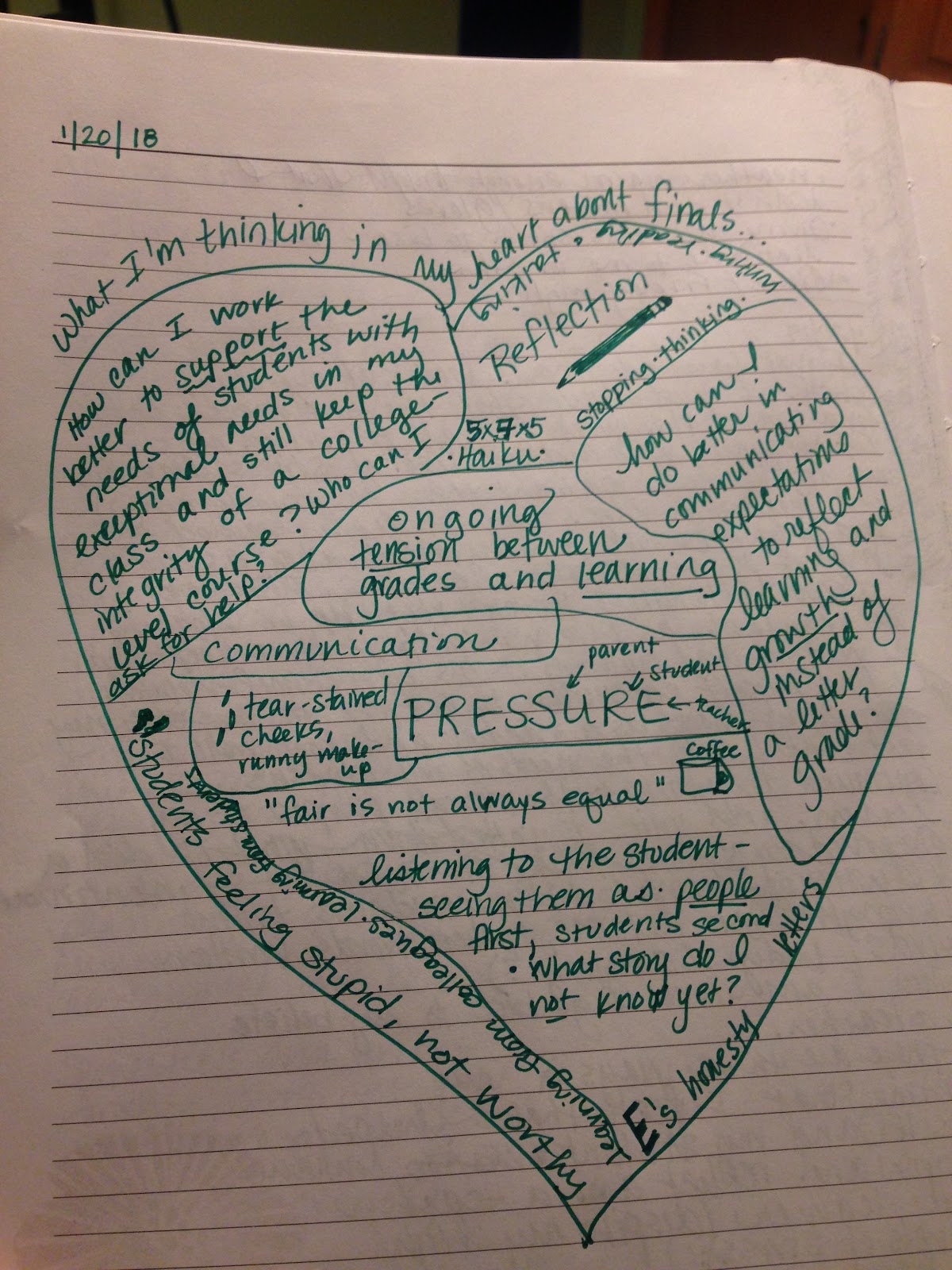
Georgia Heard's Heart Maps are sprinkled throughout my notebook. Heart Mapping is my go-to when I am having a challenging day, not sure how to move forward, or when I am unsure of what to write about. Below is my Heart Map from early this morning, reflecting on this past week of finals at my high school: 
My Heart Map this morning 
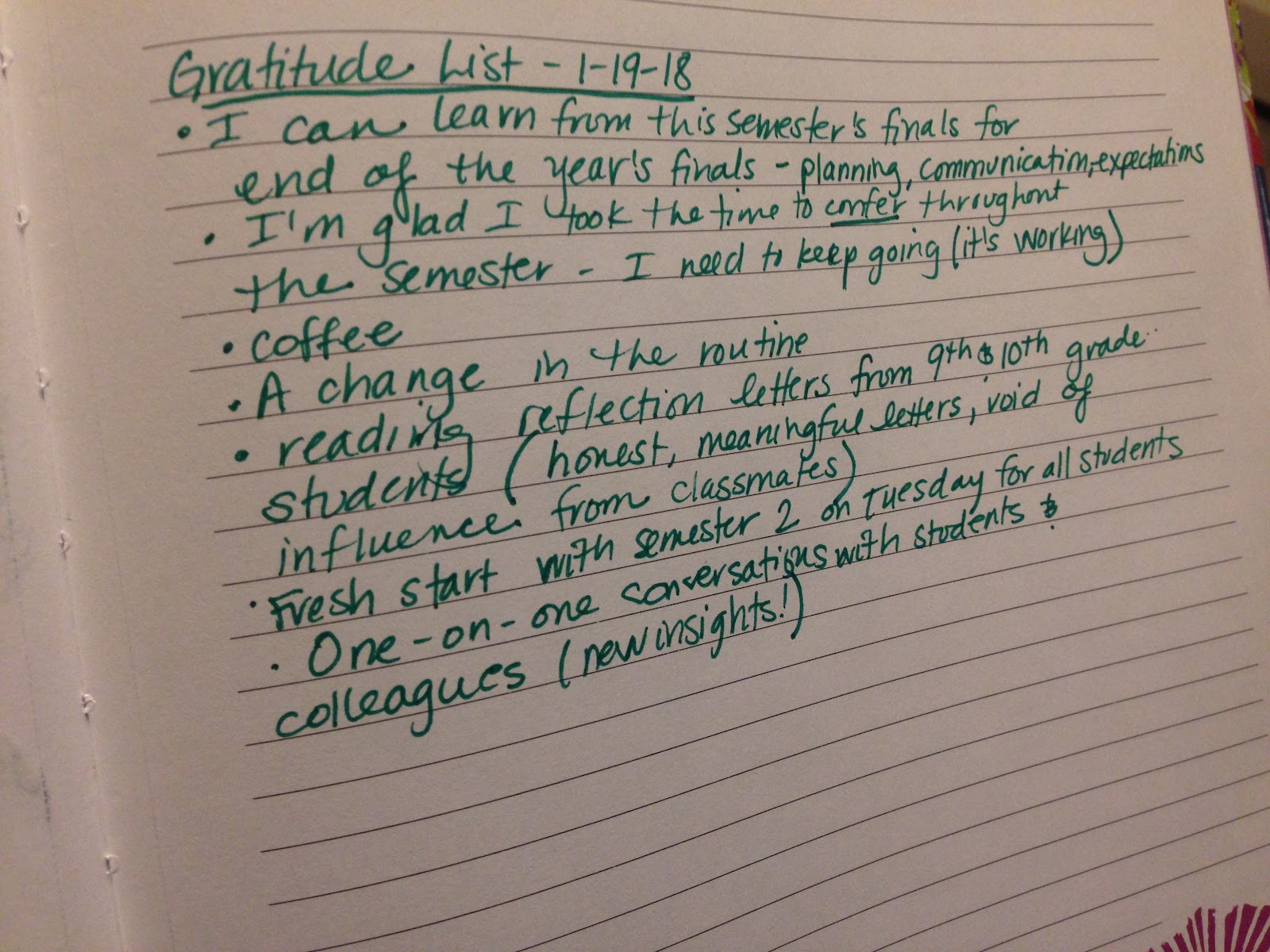
At the conclusion of each day, I create a list of bullet points of what I was most grateful for. After regularly writing lists for the past two years, I have found that this simple task often adjusts my mindset and helps me release tension or toxicity. I need this release to show up as a better human. This was last night's list (yes reader, again, it's about finals!):

Last night's gratitude list
I often gush about my love of Haiku. I try to write at least one Haiku a day. Most of my Haiku are not worthy of publishing or even sharing, but I have found that it is an effective way to think more deeply about one thing. I think Haiku is attainable as a daily writing practice because it is only three lines. In addition, I am drawn to the rhythm and predictability of Haiku. Here are a few of my Haiku that I have written this week:

(from 1/15/18)
Tension builds. Endless
Grading. Overwhelmed. Behind.
Semester finals. 

(Triple Haiku from 1/12/18)
Painful moments can
Teach powerful lessons, if
One reflects on it.

How can I apply
Lessons instead of holding 
Onto resentment?

I want to show up...
As one who applies insights
Instead of grudges. 

Heart Maps, lists of gratitude, and Haiku are three simple ways that I navigate my life through writing. Each tool has helped me to notice more, reflect, and to show up more as the person I need to be. Yes, it takes some discipline to carve out time to write every day, but for me, writing has brought me unexpected gifts of insight and reflection. As a bonus, each of these writing tools are some of the cheapest ways I know to release stress and find peace when it seems unattainable. 

Monday, January 1, 2018

On Writing Essays: Part 2


“I work not by writing but by rewriting. Each sentence has many drafts. Eventually there is a paragraph. This gets many drafts. Eventually there is a page. This gets many drafts.”
William Gass, from Don Murray’s Shoptalk: Learning to Write with Writers
(Boynton/Cook Publishers Inc., 1990)  


I’ve spent a lot of time writing during this holiday break. I’ve kept up with my daily Haiku writing and my Morning Pages, but mostly I have been diligently working on the essays I referenced here. Although I am sure that I’ll revise each essay at least one more time before submission, I paused to reflect on my process of writing.

This morning I felt stuck, particularly with one of the essays that I have been working on. Below are a few things I did as a writer to keep moving forward on my writing:
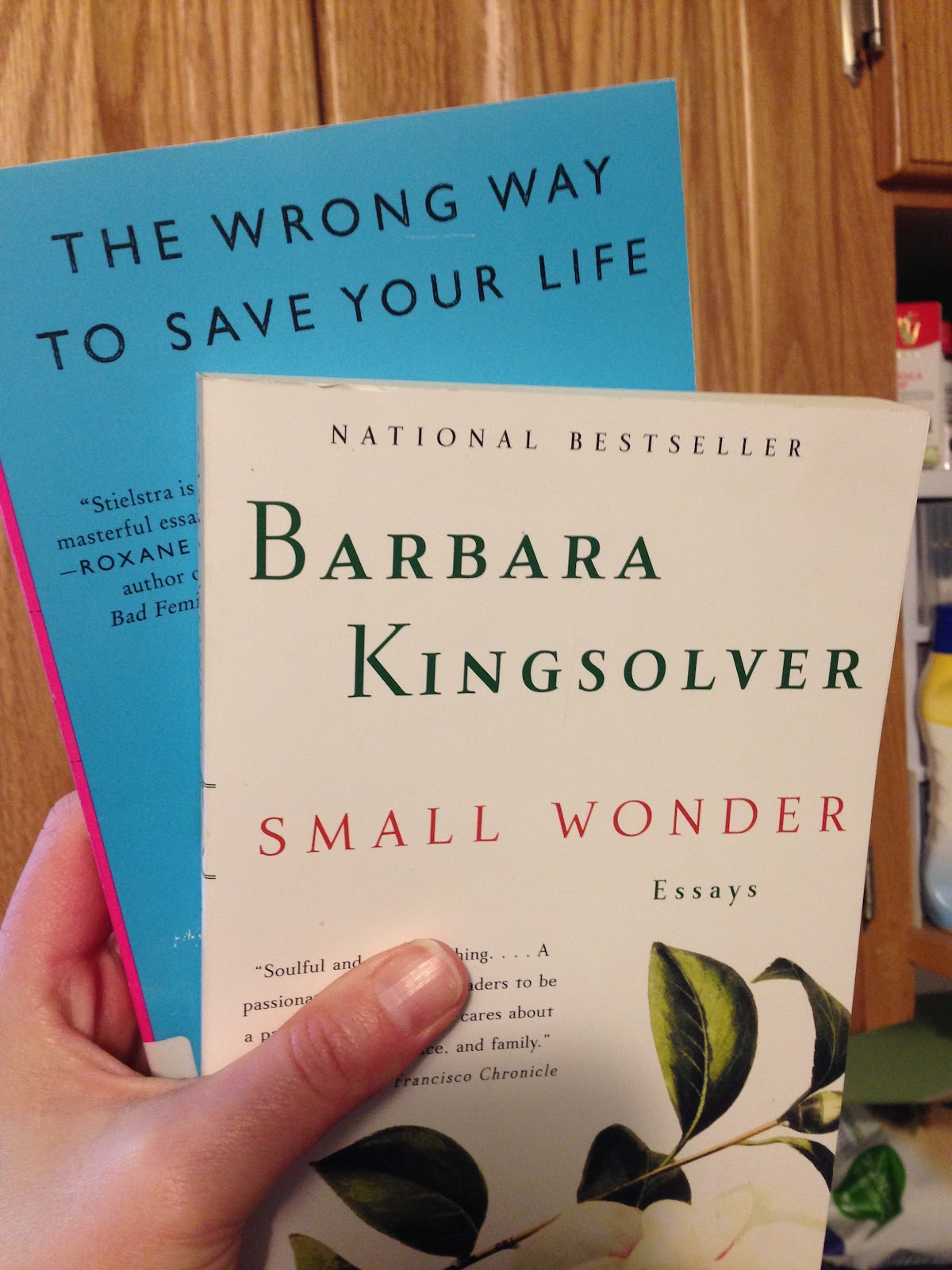
  • I studied published examples of essays. I had these two books at home: Small Wonder by Barbara Kingsolver (Harper Perennial, 2002) and The Wrong Way to Save Your Life by Megan Stielstra (Harper Perennial, 2017). These are not books that have anything to do with education or even close to the topics that I am writing about, but that doesn’t matter to me. I just needed to see some samples of how the authors began and ended their essays.
Mentor texts I had handy at home
  • It was helpful for me to read my writing out loud. My family was still sleeping (and truthfully probably would not have been patient to give me good feedback anyhow), so I ended up reading one of my essays to my puppy, Hondo. Okay, so Hondo fell asleep as I was reading my work to him, but the important part was that I listened to how my writing sounded. I changed sentences that I didn’t like and ended up changing the order of a few paragraphs.  
My dog Hondo as I read to him
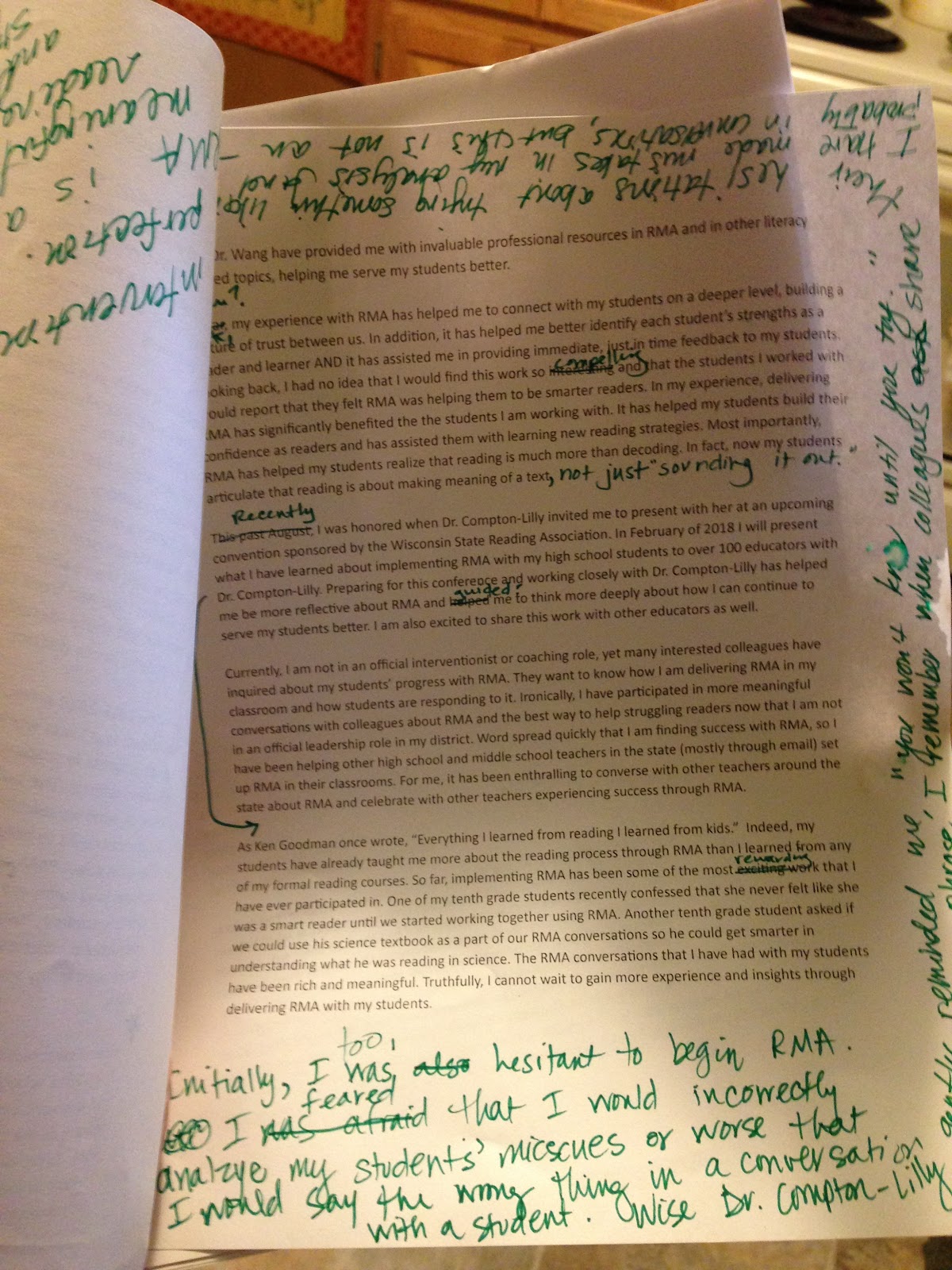
  • In writing all three of my essays, I am certain that I spent more time rereading, rewriting, and simply playing with the order of my paragraphs and word choice than I spent on actually writing each piece. I tend to do most of my editing and revising on the computer, but when I print it off, it is not pretty. I write messy notes in the margins, I often have sticky notes peeking out from drafts, and sometimes I write myself questions and reminders.
See all of my messy notes? 
  • Sometimes writing the beginning of a piece of writing is where I get stuck, as if the beginning magically determines the effectiveness of the whole piece. The essay that I was working on this morning was no exception. I wrote the body of the essay first and determined the heart of what I wanted to say before I wrote the beginning. When I got to the beginning, I wrote three different openings and selected the best one that I liked.  
  • I cringe when I think that I used to require that my students follow the steps in the writing process (in order!): prewriting/brainstorming, drafting, revising, editing, and publishing. I had beautiful, laminated posters that hung in my classroom. I thought that I was SO smart about teaching students the process of writing (and how these linear steps could be helpful to them), but I was incredibly misguided about this. As a writer, my process isn’t linear at all. It is all so tangled - a giant mess.
  • When I feel hopelessly stumped, I stop writing and take one of my dogs for a walk. (Both my dogs love this the best.) As I walk, I think about what I am trying to do as a writer. This doesn’t always work, but often I think of different ideas/insights to weave into my writing. Today is incredibly cold in Wisconsin (think -5 degrees Fahrenheit when I awoke), but even a walk around the block helped me today. 

Typically, many of my students believe that writing is a oneanddone affair, almost like on-demand writing. At times, I confess, I am guilty of showing my students how I begin a piece of writing, I lead a few mini lessons, and then present the polished result, but I am not sure that I always provide an accurate portrayal of the mess that going into my writing. The moves I made as a writer (yes, the messy ones) are the ones that I want to remember to share with my students the next time we are working on any kind of writing.

Again, I am reminded how challenging writing can be, especially when it is for something important. I've felt insecure in my writing and wanted to give up so many times in the last few days. I don't think that I talk about this part enough with my students.

Slice of Life Challenge #23: Day 31/31: March Coffee Date

F or the month of March, each day I am writing and posting  a slice of my life , hosted by  Two Writing Teachers .  Slice of Life Challenge ...