Showing posts with label Teachers are learners. Show all posts

Tuesday, November 12, 2019

Tuesday Slice of Life: Remember This for Next Year

Looking to connect with a positive, supportive online community? Consider sharing a slice of your life with Two Writing Teachers. All writers are welcome! 


Tuesday Slice of Life: 

Remember This for Next Year

"Remember this for next year," My colleague, Krista, wisely reminded me. I had just shared - for at least the twentieth time - how I have struggled with a group of high school students this year. 

Although this is not my first year teaching in an alternative education setting at my high school, two of my courses have been especially challenging to instruct this year, both through a behavioral and academic lens. 

This year I have used as many trust-building activities as possible, including circles and get-to-know-you activities. I have explicitly modeled my thinking through think-alouds and the document camera. I have worked hard to establish predictable routines. I have reached out to available instructional coaches in the district. I have read and reread professional books and articles about engagement and classroom management and literacy. 

Yet, as a seasoned teacher of nearly twenty years, I am still struggling in so many ways:
  • I have struggled to build positive teacher - student relationships. 
  • I have struggled to help my students build positive student - student relationships. 
  • I have struggled in keeping up with and adjusting instructional planning.
  • I have struggled to demonstrate student growth in literacy. 
  • I have struggled with matching books with students and encouraging them to read. 
  • I have struggled to know where to begin when my students have so many different significant needs.
At home, I consistently write and reflect on my teaching. I ask myself questions, notice patterns, record what I am wondering about. Through my writing, I only recently realized that my students seem to trust me a little bit more then they did at the beginning of the year. In fact, they seem to trust each other more. It makes me feel good that I am beginning to see them take risks as learners more often. 

It's November. Although I have seen growth in students taking risks as learners and displaying more positive behaviors as readers and learners and classmates, I continue to do a lot of kid-watching and listening. I continue to adjust my instruction and trying new things. I continue to work on building positive relationships. I continue to try new things. 

Krista is right. I need to remember this for next year for my planning and my overall expectations - it takes a while to build trust, especially with students who have not yet found success at school.  

Thank you, Krista. 


Tuesday, June 5, 2018

SOL Tuesday: Growth Through Reflection

Join Two Writing Teachers and share your own Slice of Life post today! 

"A defining condition of being human is that 
we have to understand the meaning of our experience." 

Late last week I met with Mike, one of our building's associate principals, who is also my primary evaluator this year. As a part of our teacher effectiveness system in Wisconsin, I needed to reflect on how I grew as an educator this year. Below are two areas that I highlighted with Mike regarding my professional growth for the 2017-2018 school year:

Retrospective Miscue Analysis (RMA)
One of the most exciting, rewarding things that I worked on this year was learning more about and how to deliver RMA to a small group of high school students. (You can read more about my experience with RMA in this post and this post.) Although I discovered that it was not as easy to show student growth on standardized tests and grades using RMA, my students showed growth in reading through other measures such as the frequency of self-corrections, charting the quality of their miscues, and improvements in retelling. However, what stands out the most to me was the rich conversations that I had with my students while delivering RMA. I gleaned invaluable insights about reading as students explained their perspectives to me. In addition, based on student responses from the Burke Reading Interview (BRI), my students' perceptions of themselves as readers became more positive as the year progressed, and they reported employing more strategies as readers by the end of the year. 
A view into a conversation I had with one of my students immediately following an RMA conversation. 
Learning and delivering RMA also provided me with the opportunity to network with experts in the field, such as Dr. Cathy Compton-Lilly and Dr. Yang Wang, both Language and Literacy Professors from the University of South Carolina. I am incredibly grateful for how they helped guide me in how I could use RMA effectively with my high school learners. They patiently answered my questions, routinely shared professional articles, and assisted me in problem solving how I could effectively measure and report student growth using RMA. 

Overall, I am confident that I am a better teacher of readers because of the work I did with RMA this year. As a result of learning, delivering, and analyzing RMA, I now think in a much deeper way regarding the complexity of reading, especially in considering how readers make meaning. I am eager to continue to use RMA with my students next year. 

Building Positive Relationships 
In addition, a huge take away for me was a reminder of how important relationships are. I realized that building relationships is not a "one and done" first few weeks of school activity, like learning student names, or ice breakers. Intentional positive relationship building (and working on a positive classroom community) must occur all year. Through honest student conversations and reading student reflections, I realized how the lack of positive relationships/community is often what impedes learning in a classroom. (You can read some of my journey from the beginning of the year in this post.) Students were not able to engage in learning until there was trust established between teacher and that student. For this reason, I modeled my own thinking, reading, and writing more than I ever have with students in the past. 
A Heart Map I created with my students last week using the document camera. 
As a part of striving to build more positive student-teacher relationships, I used a lot of conferring with all of my students this year. (You can read a bit about my experience in conferring in this post.) Most of my students were not used to a teacher conferring with them individually, especially in reading and writing. This was rocky with all of my classes at the beginning of the school year, but I am glad that I continued to confer with my students. Eventually, conferring became normal in all of my classes. I discovered that conferring with all of my students gave me unique entry points that helped me get to know my students better as individuals and also as learners.
One of my most valuable tools: a notebook I used for daily conferring
****************************

Blogging is one new way that I have reflected my growth as a teacher and learner this year. In fact, I was thrilled when I realized that I could use some of my writing as a part of my formal evaluation this year - so easy to embed links to show as artifacts. I anticipate that rereading my blog posts will continue to be a gauge for growth.  

Have you taken the time to reflect on the school year yet? How did you grow as a professional? 

Tuesday, May 1, 2018

SOL Tuesday: Takeaways from Participating in C3WP


Last night, as I was looking for a starting point in this blog post I began with this Haiku: 

creating, sharing
collaboration - trademarks
of Writing Project

I recently completed a year-long advanced writing institute through our local National Writing Project Site, Fox Valley Writing Project. The focus of this institute was on argument using National Writing Project's C3WP's Cycles of Instruction. 

As usual, I took more away from participating in this writing institute than I initially anticipated. I learned more about argument and how to better teach the moves of argument to writers. This work guided me in creating better mini lessons, knowing better what possible next steps with students could be, and having richer conversations with writers. 

My major takeaways of participating in C3WP included:
  • Being introduced to Joseph Harris' Rewriting: How to Do Things with Text (Utah State University Press, 2005). This book helped me better understand the moves writers make, including illustrating, authorizing, borrowing, extending, and countering. It's a resource I plan to return to again and again, not only as a teacher of writers but also as a writer myself. 
  • Although this isn't unique to argument, I learned how to layer my thinking more effectively using texts. As I have realized before, when I try the same task as I am introducing to students, I find that my teaching has more clarity and is more effective.
  • Using the C3WP Instructional Resources and implementing several mini units in my classroom. 
  • A reminder of the power of discussion and collaboration with other practitioners. Although our group was comprised of educators from different school districts, roles, and levels, I always appreciated hearing experiences and insights others shared. I left each session with new ideas and possibilities rolling in my mind. 
Overall, I love the community within a National Writing Project cohort, the work of learning through doing, collegiate conversation, and reflection. I am confident that I will begin the next school year utilizing even more of what I learned from C3WP. This will not only be better for my teaching, but it will positively influence my students.

Saturday, April 28, 2018

The Hardest Part is Over

"Let it go
Let it roll right off your shoulder
Don't you know
The hardest part is over.
Let it in
Let your clarity define you
In the end
We will only just remember how it 
feels" 
Rob Thomas, "Little Wonders" 

Yesterday I received a polite, formal rejection letter informing me that I was not selected for an educational opportunity I applied for. After over two months of waiting, I discovered that something I had put a great deal of time, effort, and thought into did not pan out. Although I genuinely saw this opportunity as a long-shot for me and I was expecting that I would not be selected, I still found myself disheartened. Sad. 

The sting of disappointment will linger with me for a while.

A large part of my school day involves working in an alternative educational setting. I am surrounded by teenagers who have not experienced a lot of success, especially in school. These are often students who move through high school without much of a voice or recognition of their accomplishments. This year has been eye-opening, and I continue to learn how to best support my students and advocate for them. I have had many gentle conversations with my students about struggle, and how to still show up as your best self and move forward, even when experiencing significant obstacles.

This is not a huge struggle for me, but it still hurts. I constantly encourage my students to practice gratitude. So, in following my own advice, below is my list of gratitude regarding this experience:
  • Three of my colleagues spent precious time crafting generous recommendation letters for me. I reread them yesterday. It mattered to me.
  • I had to write three essays for this application. In the process, I thought deeply about my beliefs of myself as a learner and as a teacher. In articulating my beliefs I was reminded of the teacher I strive to be.
  • I gained more insight in the essay-writing process and tried new ways to organize my writing, including the use of kernel essays. Because of this work I am a better teacher of writers. 
  • I have friends and family who support me, even when I experience setbacks. Thank you Abbie and Krista and Lisa.
  • I was initially scared to apply for this opportunity because of the risk of rejection. I did it anyway. A few years ago I would have talked myself out of applying, mostly because of fear. If I hadn't, I would have always wondered if it would have been possible. Now I know.   


This is certainly not the first time I have experienced rejection or disappointment. It won't be my last. 
Late last night my friend Krista sent me this quote by Theodore Roosevelt. It's one I want to remember and serve as encouragement to not let setbacks prevent me from moving forward:

"It is not the critic who counts; not the man who points out how the strong man stumbles, or where the doer of deeds could have done them better. The credit belongs to the man who is actually in the arena, whose face is marred by dust and sweat and blood; who strives valiantly; who errs, who comes short again and again, because there is no effort without error and shortcoming; but one who does actually strive to do the deeds; who knows great enthusiasm, the great devotions; who spends himself in a worthy cause; who at the best knows in the end the triumph of high achievement, and who at the worst, if he fails, at least fails while daring greatly, so that his place shall never be with those cold and timid souls who would neither know victory nor defeat."  

Perhaps the hardest part is over. I don't have to wonder about acceptance anymore. In the scheme of things, this is not that a big of a deal, even if I am feeling disappointed right now. Disappointment is a part of life. It is inevitable and this feeling won't last. 

I can celebrate what I learned, apply it, and keep moving forward.  

Tuesday, April 10, 2018

SOL Tuesday: Classroom Culture

As a new-to-the-building (and content and grade level) high school teacher this year, I’ve thought a lot about the culture of my classroom. I used to think that taking the time to build a positive classroom culture was only required at the beginning of the year through a few get-to-know-you activities and strong classroom management, but I have come to realize that building a positive classroom culture is much more than that. It must be ongoing. Intentional. Purposeful.

In thinking about what I have been doing this year to build and strengthen a positive culture, I decided to synthesize my thoughts using the format of a Skinny Poem:  

Building classroom culture takes time.
Listen,
observe,
respond,
converse.
Listen,
confer,
reflect,
validate.
Listen.
Take time building classroom culture.

************************************

Ultimately, I want my classroom to be a safe space where each student feels respected, heard, and valued as a person and a learner. I believe that students will not be in a position to effectively learn if he or she does not feel respected, heard, or valued.

What do you do to build and strengthen a positive classroom culture?

Saturday, January 27, 2018

Miscues and Modeling


“I am convinced, absolutely convinced,
that embarrassment is not only a true enemy of learning,
but of so many actions we could take to better ourselves.”
Thomas Newkirk from (embarrassment) (Heinemann, 2017)  

When I first began using RMA with a handful of ninth and tenth grade students this year, I didn’t expect the deep levels of embarrassment that my students would reveal when I asked them to read orally to me. Of course I knew that reading was not an area that these students felt was a strength for them, but I had worked exceptionally hard to develop a good rapport with them. They knew I had struggled as a reader in elementary and middle school, often feeling stupid and inadequate as a student and person. In fact, these were the same students who told me that they trusted me.

Trust is not an easy thing to come by, especially with underserved high school students.

Two months into the school year I explained the procedures and primary objective of RMA to the students I was working with. I’ve shared before of what I like about RMA, but I think it warrants repeating: I love that RMA isn’t about identifying mistakes or determining a reading level. Ultimately, it’s about listening to a reader and letting that student guide the conversation about his or her reading. Thinking and talking about miscues helps the student and teacher better understand what kind of strategies that student is using.

RMA is a strength-based approach. It helps us meet students where they are.

Part of the process of RMA is to record the student orally reading a short text. Recording a student’s oral reading helps the student be able to listen to his or her reading and be metacognitive in his or her moves as a reader. Listening to a recording also helps the teacher analyze the reading and consider possible mini lessons to inform instruction. After talking with my school’s technology integrator, I used an online video editing program called WeVideo. WeVideo is cloud-based, so I could easily access the audio files from any device, and I could use the audio recording feature with a Chromebook.

As I was figuring out how to best incorporate RMA into my classes/instruction, I invited my students to record their reading in a quiet corner of the classroom as I was reading/conferring with the rest of the class. Initially, one of my students refused to read for me. He (I’ll call him Theo) told me how stupid and boring reading was and that he would not read for anyone. I gently explained to Theo (again) about how every person miscues as he or she reads. I studied him as talked with me about his refusal to read. He looked visibly uncomfortable, his body straight, his hands clenched.

I didn’t push him.

A few days later, when I quietly approached him again, Theo reluctantly agreed to work on RMA with me on one condition - if it was just the two of us and no one else could hear him read. I agreed and told him that I would figure out a time that he and I could work together without his peers in the room.   

Theo’s hesitation to orally read reminded me of a conversation I had at the beginning of the school year with my eleven-year-old son, Isaac. An avid reader, Isaac devours books. He is the kind of kid who reads with a flashlight under his sheets well after I’ve tucked him in for the night. Isaac loves to visit the library and bookstores. He even confidently reads in front of our congregation at church. Yet, once Isaac told me that he hates reading aloud to his teacher, especially when his teacher is conducting a reading benchmark. He recently told me:

“Mom, I hate it. Out of the corner of my eye I see her make a mark every time I say something wrong. It makes me feel nervous. I mess up more. I can’t see what she’s writing about me. It's awful... Once I had a bad day and went down a level. Just because I made some mistakes.  And then I had to switch reading groups and it was on my report card. I hate benchmarking.”  

Yikes.

Isaac generally likes school. He likes his teacher. He loves reading and knows he’s a strong reader. If benchmarking makes him nervous, I cannot imagine what it feels like for students who already feel stupid as readers.

Based on Theo’s conversation, I decided that we needed to meet in a less threatening environment. In our high school we have a non academic daily class hour, Flex, that is reserved for students getting help in their classes or meeting with a group/club. As a teacher I can request to meet with a student or a student can request to meet with me. I couldn’t meet with these students every day for RMA, but I figured out a way that I could meet with each student individually to deliver RMA once every two weeks. It wasn’t (and still isn’t) ideal, but I figured that some time was better than no time.

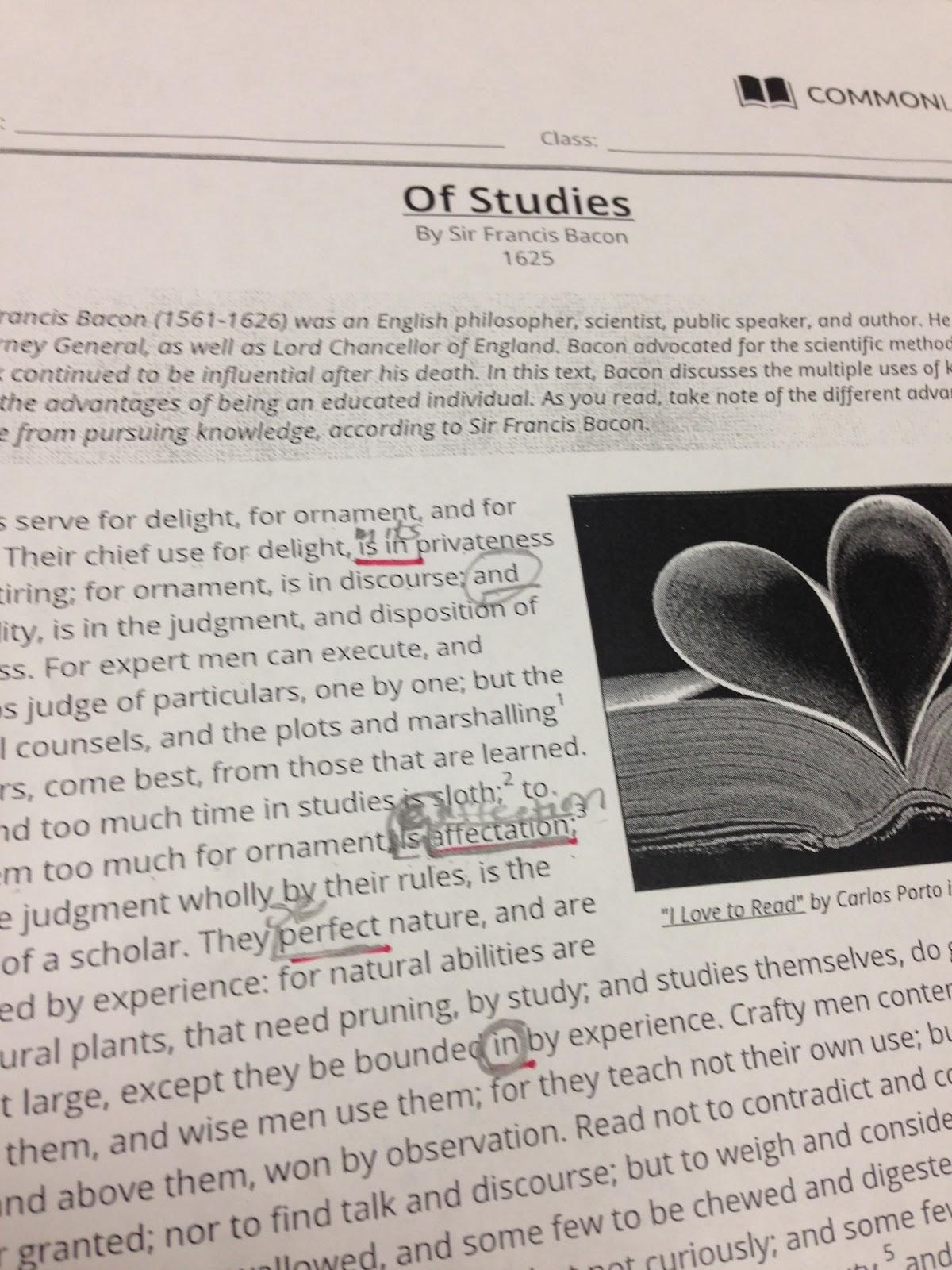
After some personal reflection, I also decided that I needed to do a more thorough job of explaining RMA to my students. To accomplish this I decided to model myself orally reading a text and have a conversation with them about my miscues. I wanted to show my students some of my vulnerability as a reader, so I selected a text that was intimidating to me - one I knew would challenge me. Even though I am a voracious reader, I still struggle with many texts, and I wanted my students to see this. I selected a short essay by Sir Frances Bacon, “Of Studies," to read. I recorded my oral reading and later listened to it with my students. Analyzing my miscues with my students helped me explain what it meant to miscue and it showed my students that everyone miscued. Using my miscues, I taught my students what an omission, insertion, and repetition was, and it was how I explained the difference between a high level and a low level miscue. My reading and conversation about my reading was authentic and helped me to better understand what my students went through when they had a conversation with me.

My miscues from "Of Studies"


Of course, listening to my reading and talking about my miscues with my students took extra time. It was less time that I worked with my students on their reading. However, I believe that taking the extra time it took me to model and talk about my miscues made a huge difference for my students. When we started using their reading and having conversations about their miscues, I found that we had meaningful and engaging conversations. Best of all, when it was Theo’s turn to read his first text, his face and body looked relaxed. I felt that Theo revealed more about himself as a reader and learner than before.

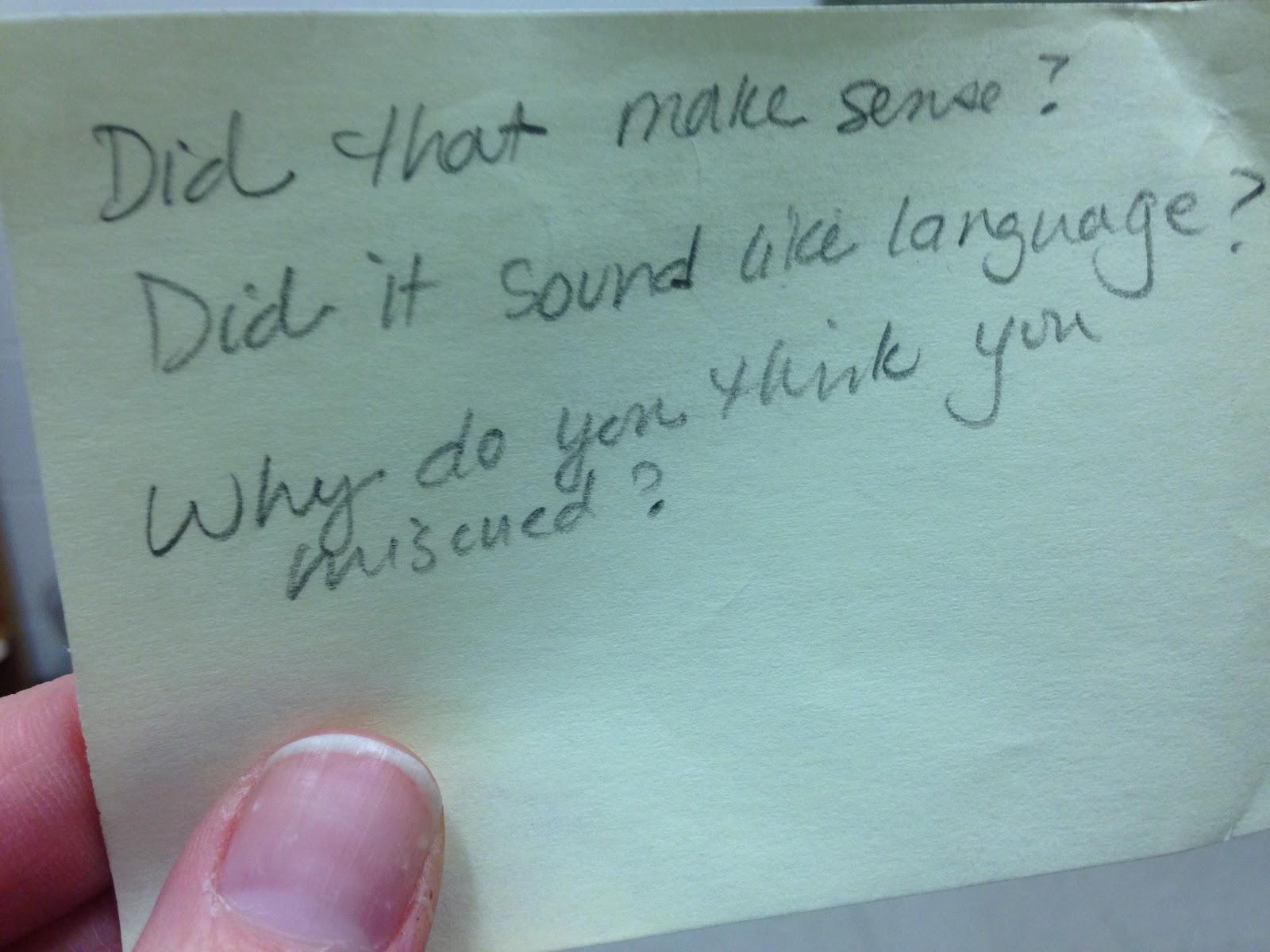
Based on my conversations with Isaac about his reading benchmark and listening to Theo's hesitations, I made some changes in some of my practices with RMA. Now I try to be as transparent as possible with my students. I invite them to view my notes during our RMA sessions. In addition, although I analyze student miscues based on the recording before I meet with each student and have some teaching points planned, I always let the student lead the conversation based on what he or she notices as a reader and learner. This means that I don't always use the mini lesson I planned, and that's okay. I also post sticky notes as a visible reminder to me and my students about what we want to consider when we think about our miscues.

One of my sticky note reminders


Overall, I am grateful to have the experience of using RMA with my high school students. Watching my students and listening to them share their insights about reading has been inspiring. It has also deepened my knowledge for learning more about the complex process of reading and the direction I need to take to serve my students better.

Sunday, October 8, 2017

The Energy to Teach

Confession: the last two weeks of teaching have not been my finest. One of the worst days was when one of senior high school students was disrespectful to his classmates and me. When I tried to gently address this with him, he announced yelled to the whole class, “I hate this class! I wanted Ms. ________ and instead I got you! This sucks!” He walked out of my classroom before I could say much more. Meanwhile, I heard another student say under her breath, “Senior year is supposed to be fun. Can’t she loosen up?” Defeated, I observed the rest of my students. Prior to his outburst, I had been individually conferring with students on a piece of writing. As I scanned the room, I noticed that many of my students were doing anything but working on writing - they were on their cell phones (not as an academic resource, as I had requested, but probably Snapchatting or texting), and one student was intensely applying her make up instead of writing. That morning I left class feeling so frustrated, wondering, why did I leave my position as a literacy coach for this?


These student comments and my observations hung heavy on my heart all day.


That night, as I wrote in my notebook, listing as much as I could remember, especially about that class hour. Although writing about a challenging event often makes me feel better and provides me with a better perspective, this time I felt worse, my inner critic loud and harsh. In an effort to try to focus on what's been positive in my teaching, I made a list of what I felt like I have been doing right in this classroom so far, and it looked a little like this:
  • I’ve been writing with and in front of my students every day.
  • I’ve been providing them time each day for independent reading and time for writing.
  • Students have choice in what they are reading and writing.
  • I have been individually conferring with students in both reading and writing.
  • Most days I have provided a daily agenda and specific learning targets.
  • I’m giving and getting feedback from my students each day.
  • Students have many opportunities to talk with each other in partnerships and in small groups.
  • I encourage students to write about what is meaningful to them.


I knew that I was applying best practices in teaching, all that could be backed by research, but I couldn’t help but wonder, what was I doing wrong? So many of my seniors acted like they just didn’t care about learning anything. True, I wasn’t the beloved teacher that many of them wanted for their teacher, but I couldn’t change that. They couldn’t do much about it either.  


As I wrote, I thought back to a teacher (I'll call her Ms. Smith) whom I had been working with in a coaching capacity a few years earlier. Just like me, Ms. Smith was frustrated with her students after a challenging lesson. She didn’t know what to do next or how she could possibly teach them. My first impulse was to give Ms. Smith a long list of things that she could try with her students, but I knew that listing off what I knew probably wouldn't help her grow, or worse, it could backfire. In fear of saying the wrong thing to Ms. Smith (and risk ruining the coaching relationship that I had worked so hard to establish), I reached out via email to respected instructional coach and staff developer, Samantha Bennett, who I had recently seen speak at our state’s annual reading convention. Sam quickly responded to my dilemma and shared what she learned from Don Graves, particularly from his book The Energy to Teach (Heinemann, 2001). Sam wondered what the outcome would be if we approached that day as an inquiry and created a chart focusing on a few students and answering these questions:
  1. What do you know about this student as a person?
  2. What do you know about this student as a learner?
  3. What does this student know you know?
  4. Knowing this, what are your next steps?


Since I had (and still have) such a high level of professional respect for Sam, of course I dove into her query. As I worked with Ms. Smith the following day, we created and completed a chart answering these questions. As she and I filled out this chart together, it filled me with empathy for many of her students. In addition, it reminded us both how students often act when they feel threatened (and don’t want to look stupid). Later, Ms. Smith reported that she changed her approach in how she spoke with students and her interactions with them. This change made a huge difference for Ms. Smith and her students, not just the next day or week, but for the rest of the year.


In thinking about how I coached (and learned) with Ms. Smith I realized that perhaps I could benefit from participating in the same inquiry. So I created a chart in my notebook, focusing on the students who seemed to be the most outspoken and resistant to learning in my class. As I was filling out my chart, it hit me. Although I knew some things about my students, it was not enough. I could respond better to their needs if I knew more about each of them as people and as learners.


I pondered my next steps and decided that I could invite students to tell me more about themselves as learners and individuals, so I created a survey using Google Forms. Although I knew it would be probably be better to ask each student in person, this survey would at least be a starting point. A few of the questions I asked students are listed below, including what do you want me to know about you as a person and what do you want me to know about you as a learner:


A screenshot from part of my survey


Many of my students' answers surprised me. I learned more about my students than I thought I would from this survey (and most of their responses were things that I couldn’t tell from looking at their past grades or standardized scores). A few of their responses included:
  • “I have never been a good writer.”
  • “I have a lot of anxiety about school, and I wish more teachers were more understanding about my mental health.”
  • “I struggle to keep my focus.”
  • “I work two jobs and don’t get home until 11 on most nights.”
  • “English is my hardest class. I’ve never been a good reader.”
  • “My parents just got divorced, and it’s hard. I’m sorry if I am sometimes moody.”
  • “I need more examples of what to do because I don’t know what you want.”
  • "I'm worried I won't graduate if I don't pass this class."


The next two days I spent following up with students whose comments I didn’t understand or wanted to comprehend better. One of my students wrote, “I wish I knew what your adjective was.” I was so perplexed when I read her comment, but as I spoke with her, I quickly realized that she meant objective, not adjective. And of course, many of the conversations I had with students were hard. One student asked me if I could just hand out a packet of work (like he was used to in other classes). Another student told me that she was afraid that I was going to teach one thing and expect another when it came to grades (ah, the “gotcha” grade). In response to using an assigned seating chart, a few students inquired why I didn’t treat them more like adults and let them sit where they want. A different student told me that he didn’t understand why I needed to meet with students so much because he didn’t feel that he needed to work on his writing - finishing the draft was enough. Finally, a few of my students told me that they didn't care that they could read or write well because they weren't planning to go to college. They just wanted to graduate from high school.

Sigh.


Overall, I am glad that I made the time for students to provide me with more feedback. I learned more about many of them and I realized that I could tweak a few things in my instruction. In listening and talking with my students, it became apparent that I need to write my learning targets in a more student-friendly manner and involve my students more often in identifying how they are meeting each learning target. I also need to continue to make time to listen to my students, even if some of the feedback is uncomfortable to read and hear.

Each day I am humbled at the complexity of teaching and all that I still need to learn in order to serve my students more effectively.
Saturday, September 16, 2017

On Teaching Writers: A Shift in My Perspective

Several years ago I heard Katherine Bomer speak at our Wisconsin State Reading Association (WSRA) Convention. I’m embarrassed to share that at that time I had no idea who Katherine Bomer was, except that she spoke at educational presentations and wrote professional books. When I first heard Katherine speak I was mid-way through my first year as a literacy coach. Along with my colleagues, I was trying to figure out the shifts in the Common Core State Standards and what that looked like in secondary English Language Arts (ELA) classrooms.


In her presentation, Katherine made the claim that everything was an argument. She pointed out that writers always write to convey some sort of message. She challenged us to look for the message writers shared in their poetry and memoirs. We found argument in all of the writing samples, even though it was often implied. I was amazed at the sophistication of writing that Katherine presented from young writers. I remember leaving Katherine's presentation with a headache, thinking about argument and about writing in a way I had never considered before.


Katherine's presentation, especially hearing her statement that everything was an argument, nagged at me for some time. It made me feel uncomfortable. Now I realize that this uncomfortable feeling was one of the best things that happened to me as a teacher and as a literacy coach.

Before I began my position as a literacy coach I taught eighth grade ELA, and I taught students that writing fit into one of three categories: argument/opinion, informational, and narrative. I thought all writing fit neatly into one of those three categories. When we looked at examples of writing from "real life" I was often frustrated that I could not find writing that perfectly fit into argument or narrative or information. I didn't realize then that writers usually blend genres of writing and writing wasn't supposed to neatly fit into one category. I didn't consider that writing (except for essays in school) rarely fit into one category.

Katherine didn't just nudge me to think about the place of argument in writing. She helped me think about myself as a teacher of writers and inspired me to think about how I could teach writers in a more effective way.


Soon after I heard Katherine, I began my own inquiry of how I could be a more effective teacher of writers:
  • I began reading more professional books, especially by teachers who worked more at the elementary and early literacy levels. I read books by Katie Wood Ray and Ralph Fletcher and of course, Katherine Bomer.
  • I immersed myself in books written by professional writers like Anne Lamott and Natalie Goldberg.
  • I started investigating the possibility of using mentor texts and went through the process myself of emulating mentor text with students and teachers.
  • I participated in a writing institute through our local site of National Writing Project.
  • I began writing again, not just as an example for students or as a personal journal. Really writing and living as a writer. Noticing. Playing with ideas.


My perspective changed of what it meant to be a writer. My perspective changed of what it meant to be a teacher of writers.


Now I have students of my own again. Full time. I'm not teaching writers in the same way that I used to. In fact, last week I found myself sharing with my high school seniors the same message that Katherine Bomer shared with me: everything is an argument. I challenged my students to find the author’s argument in essays and poetry.


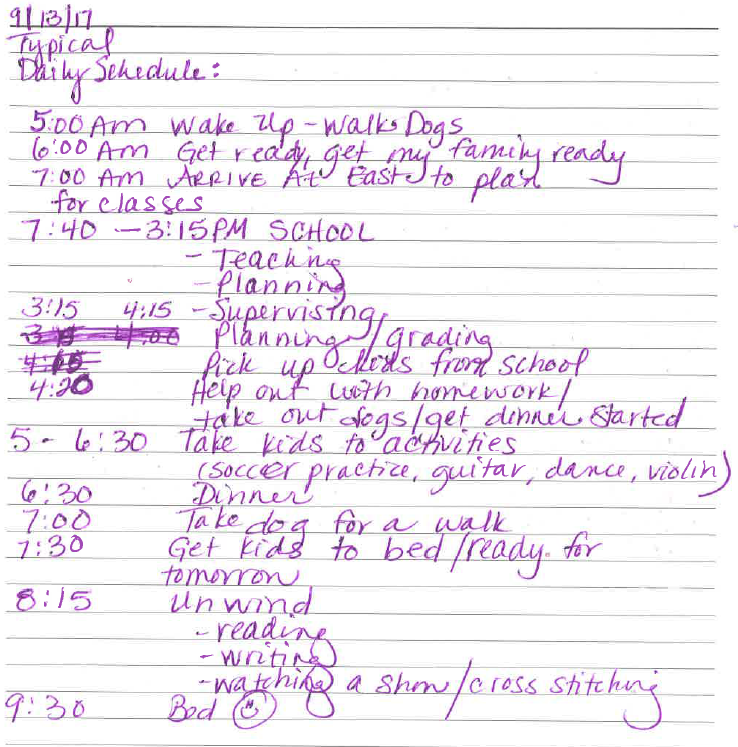
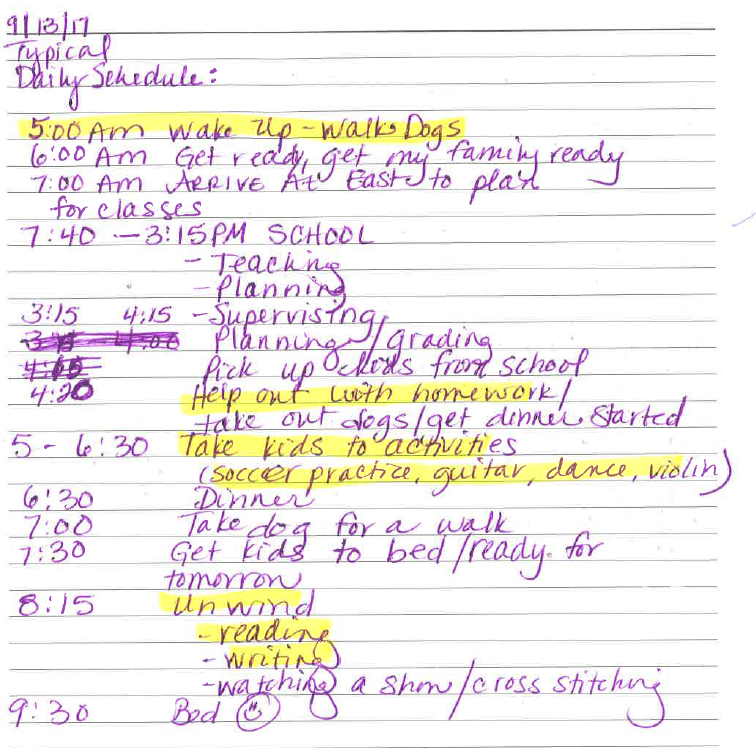
In an effort to get to know this year’s students better and to continue to establish writing routines, I invited each student to think and record their typical daily schedule. This was an activity that I tried at last summer’s Fox Valley Writing Project’s C3WP’s Advanced Writing Institute. Here is my schedule I shared with my seniors:


My typical day's schedule 


Next, I invited students to highlight or star areas that stood out to them or what they viewed as important.
My schedule with highlights 
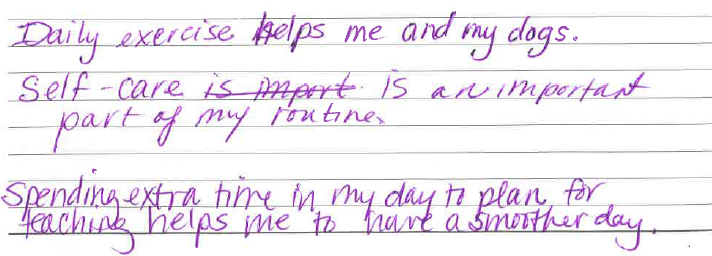
And then, based on what students highlighted or starred, I invited them to generate a few claims about what their schedules revealed about them. Here are a few claims that I came up with based on my schedule:  

My claims 

Finally, I ended class that day with an invitation for students to select one claim to write about in a Quick Write. I wrote my Quick Write using the document camera in front of my students, emphasizing that Quick Writes are not about perfection or even really good writing. Quick Writes are a starting point for writers.

My Quick Write
As I look back to how I used to teach writing, I realize that I was not really teaching the writer. I was teaching writing to students that would only be helpful to them in a school setting. I used to require my students to write a narrative essay, an informational piece, and an argumentative essay, usually in the form of a mega research paper. I didn't model my own writing very much as a teacher. In fact, I did a lot more assigning than teaching. For the most part, my students didn't care about writing, and I didn't enjoy teaching this way either.


Now I'm working more to invite students to write about topics they are passionate about. I search for ideas to help my students write for real purposes and an authentic audience. I'm writing with my students and sharing my writing more than I ever have before.

I now see my students as teachers who I learn from.

I remain in awe of Katherine Bomer. I had the opportunity to hear her speak again this past February. This time I got to meet her and talk with her. I think she's a gifted writer, passionate speaker, and a genuinely kind and compassionate person. However, I am most grateful of how my initial discomfort from Katherine's words helped me grow as a teacher and as a writer. I cannot wait to learn more from her and other teachers who write. Above all, my approach to teaching writers has changed, as well as my journey as a writer.

Slice of Life Challenge #23: Day 31/31: March Coffee Date

F or the month of March, each day I am writing and posting  a slice of my life , hosted by  Two Writing Teachers .  Slice of Life Challenge ...